 admin
Very few young adults have grown up under a spotlight quite as intense as the one that followed Bigi Jackson from the day he was born. As the youngest child of Michael Jackson, he was famous before he could walk, and his childhood nickname was known in newspapers around the world. Yet unlike many celebrity children, he has not chased fame as an adult. Instead, he has built a quiet life in California, stepped behind the camera, and let his work speak for itself. That contrast between an extraordinary childhood and an ordinary adult life is what makes his story worth telling.
This article follows that journey in a straightforward way, from his birth in California and his early years at Neverland to the name change that marked a turning point in his teens. It also looks at his family, his film work, and the choices that have kept him out of the headlines for long stretches. Readers who know Michael Jackson only through his music may be surprised by how little his youngest son resembles a typical celebrity child. Bigi Jackson comes across instead as a private young man who values creative work, family loyalty, and a normal daily routine above attention.
Table of Contents
Early Life in California and at Neverland
Bigi Jackson was born Prince Michael Jackson II on 21 February 2002 in La Mesa, California, a city in San Diego County. He was the third and youngest child of Michael Jackson, and unlike his older siblings, he was born through a surrogate whose identity has never been publicly disclosed. The family has kept that detail private, and reputable coverage has respected the boundary rather than filling the gap with guesswork. From the start, then, his story came with a firm line between public curiosity and private fact, a line that still shapes how he is written about today.
His earliest years were spent largely at Neverland Ranch, his father’s famous estate in Santa Barbara County, where life was kept as sheltered as possible. Visitors and staff later described a home filled with animals, fairground rides, and film screenings, a place designed to feel like a private world. For a small child, that setting offered both wonder and isolation, because the outside world knew his face and nickname long before he understood what fame meant. Bigi Jackson therefore grew up inside two realities at once: a playful, protected home life and a global media story that ran without his permission.

That media story turned sharply in November 2002, when his father briefly held him over a balcony railing at the Hotel Adlon in Berlin to show him to fans gathered below. The baby, then nine months old, had a cloth over his head, and photographs of the moment travelled around the world within hours. Criticism was swift and widespread, and his father later apologised, saying he had made a terrible mistake. The episode followed Bigi Jackson into childhood and fixed the nickname Blanket firmly in the public mind, and it remains the most replayed image of his infancy, even though it says little about the person he later became.
Growing Up After 2009
Everything changed on 25 June 2009, when Michael Jackson died in Los Angeles at the age of fifty. His youngest son was only seven years old, and along with his older siblings, he was placed under the guardianship of his grandmother, Katherine Jackson. The months that followed were covered intensely by the press, yet the family worked to keep the children’s daily lives steady. School, meals, and time together mattered more than headlines. Bigi Jackson spent those years largely out of view, growing up in a household that tried to give three grieving children as normal a childhood as circumstances allowed.
He later attended The Buckley School in Sherman Oaks, California, where classmates and teachers knew him simply as a pupil rather than a headline. Reports from that period describe a boy who enjoyed films and quiet hobbies, and who preferred the company of a small circle of friends. That school setting mattered because it gave him a routine, a place where success was measured by schoolwork and friendships rather than by fame. Bigi Jackson has rarely spoken about those school years in public, which fits a pattern: the less he says, the more room he has to live without commentary.
His older siblings took different public paths, with Prince moving into charity and media work and Paris pursuing music and acting, but the three have often appeared together at family occasions. Those joint appearances suggest a bond that survived an unusual upbringing, even as each sibling chose a different relationship with fame. Friends of the family have described the siblings as close, and their public support for one another at premieres and memorial events has been warm and understated. Privacy, in that sense, has been a shared family value rather than a solo decision.
From Blanket to Bigi
For the first thirteen years of his life, the public knew him almost entirely as Blanket, a name his father had explained as a term of affection. Michael Jackson said a blanket was something that covered a person with love and blessing, and the name was meant warmly rather than as a joke. Audiences, however, treated it as a curiosity, and it became a label that followed the boy into school corridors and online comment sections. Bigi Jackson carried that nickname through childhood, but by his early teens, reports suggested he had grown tired of the teasing and attention it brought.
In 2015, when he was thirteen, he began going by the name Bigi instead, a shorter, more grown-up version of his identity that he could own for himself. The change was reported widely at the time, and it was widely seen as a young person drawing a line under a childhood label. He did not announce the change with a statement or an interview, which was itself telling: the new name simply started appearing in coverage, school references, and family mentions. Bigi Jackson had chosen how the world would address him, and most outlets respected the choice without fuss.
The name change matters more than it might seem, because it marked the first public decision he made about his own identity. Until then, almost everything known about him had been decided by adults: his nickname, his public image, and the stories told about his childhood. Choosing Bigi was a small act, but it signalled a shift from being a famous child to becoming a young adult with preferences of his own. It also set the tone for the years that followed, in which he would keep making quiet choices rather than loud announcements.
Family, Siblings and Guardians
His family story is inseparable from the wider Jackson family, one of the most famous musical dynasties in American pop history. His older brother, Prince, was born in 1997, and his older sister, Paris, in 1998, and both have spoken at times about their father with affection and honesty. The siblings share a father but have different mothers, and their upbringing after 2009 was shaped above all by their grandmother’s care. Bigi Jackson remains the youngest of the three, and in family photographs he often stands slightly apart, a reminder that he experienced his father’s fame for the shortest time of them all.
Readers who enjoy following the lives of young people from famous families may also like the story of Jasper Breckenridge Johnson, another celebrity child whose quiet path has drawn steady interest. The comparison is useful because it shows a wider pattern: children of famous parents often grow up under similar pressures, yet they respond in very different ways. Bigi Jackson chose a route built on privacy and creative work behind the scenes, rather than on social media fame or reality television. That choice places him closer to the quieter end of celebrity life, where a person’s work matters more than their follower count.

Katherine Jackson remained a central figure in his upbringing, and cousin T. J. Jackson later shared guardianship duties, according to public court records and reputable reports. His godparents are reported to have been actor Macaulay Culkin and the late Elizabeth Taylor, both close friends of his father, although the family has never made a public show of those connections. What matters more is the steady presence of relatives who kept his life grounded. Bigi Jackson grew up surrounded by aunts, uncles, and cousins who understood fame from the inside, and that network offered both protection and a sense of belonging.
For a concise summary of his birth, family, and film work, the encyclopaedia entry for Bigi Jackson is a useful starting point. It gathers the basic facts in one place, but it cannot capture the quieter parts of his life, such as friendships, study, and everyday choices away from cameras. Readers who want a fuller picture should look for reputable profiles and interviews, because those sources add tone and context to bare dates and names. An encyclopaedia page is a map, not the journey itself, and his story is best understood through the small, steady choices described in this article.
Film Work and Rochelles
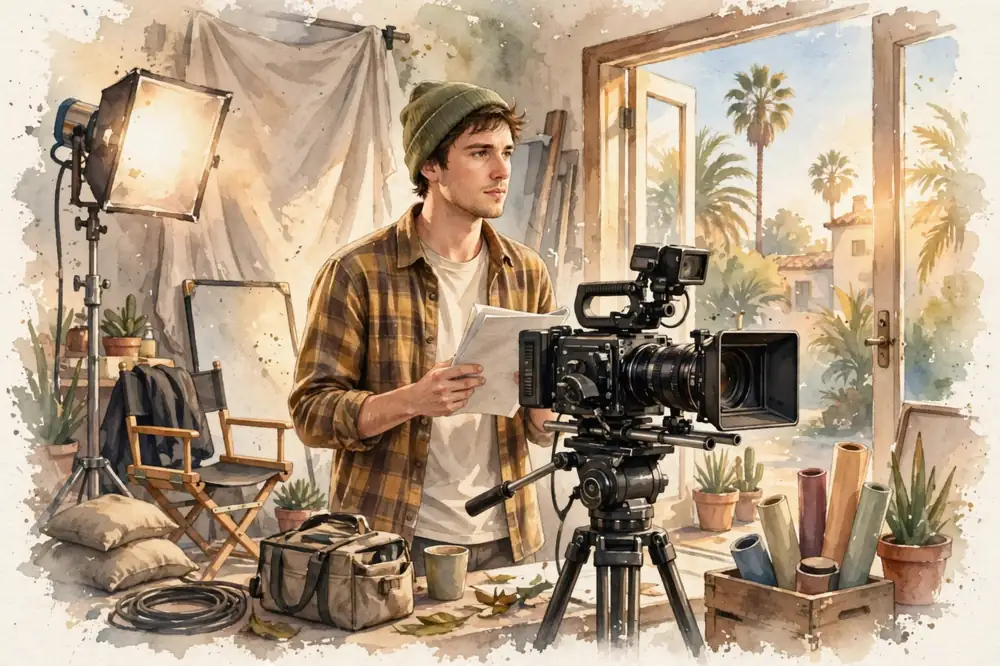
His first steps into creative work came through Film Family, a YouTube project he co-founded with his brother Prince and their cousin Taj Jackson in 2019. The channel featured film reviews and discussions, and it gave him a chance to talk about cinema without putting his private life on display. Viewers noticed his knowledge of film history and his relaxed manner on camera, qualities that suggested a genuine passion rather than a publicity exercise. Bigi Jackson appeared comfortable discussing movies he loved, and the project hinted at a future behind the camera rather than in front of it.
That future took clearer shape with Rochelles, a short film he wrote and directed, which premiered at the Santa Monica Film Festival and won the award for Best Drama there in 2024. The achievement mattered because it was earned under his own name and on his own creative terms, judged by festival audiences rather than by celebrity coverage. Details of the plot have been kept modest in public coverage, with reports describing a short drama rather than a star vehicle. Bigi Jackson had moved from discussing other people’s films to making one of his own, and the award gave that step a measure of independent recognition.

Directing a short film is a demanding test for any newcomer, involving script choices, casting, camera work, and editing decisions that cannot be faked. Festival recognition suggests he approached that test seriously, working with a small team and a limited budget rather than relying on a famous surname. The project also fits his broader pattern of choosing work that speaks quietly: a short drama shown at a festival reaches a smaller audience than a streaming series, but it reaches people who care about film. That trade, attention for craft, seems to suit him well.
Whether he goes on to direct features, produce, or write remains an open question, and he has not announced a slate of projects in the manner of a rising star chasing headlines. What seems clear is that filmmaking gives him a way to honour his father’s creative legacy without imitating it. Michael Jackson was a performer; his youngest son is drawn to the work that happens off stage, where stories are shaped before an audience ever sees them. Bigi Jackson may therefore build a career that is respected inside the film world long before it becomes widely known outside it.
A Private Life in California
In 2020, shortly after his eighteenth birthday, reports said he had bought a home in Calabasas, California, for around $2.62 million, a detail that suggested a move toward independent adult life. The purchase was widely reported, yet he did not turn it into a public moment, and no tour or announcement followed. He is also reported to have no public social media presence of his own, with fan-run accounts filling the gap online. Bigi Jackson therefore remains unusually hard to follow for a celebrity child, and that absence is itself a statement about the life he wants.
His rare public appearances have tended to be purposeful rather than promotional. In 2021, coverage reported a video message in which he spoke briefly about climate change alongside his brother, and the moment drew attention precisely because it was so uncommon. A young man who rarely speaks in public had chosen to speak about the planet rather than about himself, and coverage at the time noted his calm delivery and his focus on the message, not on personal branding. The clip remains one of the few extended glimpses of his adult voice, and it showed a seriousness that surprised some viewers.
That low profile has practical benefits as well as personal ones. Without a constant feed of posts, he avoids the daily scrutiny that wears down many young celebrities, and he can work on film projects without every draft becoming news. Friends and family have described him as thoughtful and private, and his public record supports that picture. He attends family events, supports his siblings, and then returns to a life that is mostly his own. For readers used to celebrity children who live online, that restraint can feel refreshing, even old-fashioned. Bigi Jackson has kept that balance for years now, and it is one reason his rare appearances still draw interest.
Legacy, Estate and What Comes Next
His connection to his father’s estate entered public coverage again in March 2024, when reports said he had objected to aspects of the estate’s business dealings, including a major catalogue transaction. Court filings and press reports described a disagreement within the family about how estate funds should be used, with his grandmother also involved in related proceedings. The details were legal and technical, and the family did not turn the dispute into a public argument. Bigi Jackson appeared in that story not as a celebrity seeking attention, but as a young adult with a financial stake in decisions made about his father’s legacy.
Questions about his wealth come up often in online searches, and this article deliberately avoids giving a single figure as fact. Various celebrity net-worth websites publish large estimates, but those numbers are unverified, they differ widely from site to site, and neither the family nor the estate has confirmed any of them. Readers should therefore treat such figures as guesswork rather than information. Bigi Jackson inherited a famous name and a share of a complex estate, but the size of his personal fortune is not publicly documented, and honest coverage should say so plainly.
The wider legacy question is cultural rather than financial. Michael Jackson remains one of the most discussed musicians in history, and his children each carry that legacy differently. In 2026, coverage reported him attending a Berlin premiere event for Michael, the biographical film about his father, alongside his brother, a reminder that the family’s story continues to unfold in public. Whether he attends premieres or stays away, his father’s music remains part of the background of his life. Bigi Jackson cannot escape that shadow, but his film work suggests he is learning to live beside it rather than inside it.
What comes next for him will probably arrive quietly, as most things in his adult life have done. A new short film, a festival screening, or a production credit may appear without fanfare, and only later will audiences connect the dots. That pace suits a filmmaker still learning his craft, and it protects him from the pressure of being labelled a star before he is ready. Bigi Jackson has already shown that he can choose his own name, his own work, and his own level of fame. If he keeps making those choices carefully, his story may turn out to be less about being Michael Jackson’s son and more about the films he makes himself.