 admin

Daisy Lowe is an English fashion model who has spent more than two decades in front of the camera, moving from teenage catalogue shoots to the runways of Chanel and the pages of Italian Vogue. She is also the daughter of two famous parents, a fact that has followed her since childhood, but her longevity in fashion rests on her own record rather than her surname alone.
She was born in London on 27 January 1989, and grew up surrounded by music, fashion, and the kind of creative household that makes a modelling career feel almost natural. Yet her story has a twist that most profiles mention early: for years she believed another man was her father, until a paternity test in 2004 revealed that her godfather, Bush frontman Gavin Rossdale, was her biological father. That revelation became public knowledge and shaped how the press wrote about her for years.
Table of Contents
Today she is known for far more than that early headline. Daisy Lowe has modelled for Burberry, Louis Vuitton, Marc Jacobs, and Agent Provocateur, acted in films, danced on Strictly Come Dancing, and built a family life with her husband Jordan Saul. This article looks at the full picture, from her Primrose Hill childhood to her current work in fashion and design.
Early Life in Primrose Hill

Daisy Rebecca Lowe was born on 27 January 1989 in Westminster, London, to Pearl Lowe, a singer-songwriter turned textile and fashion designer, and Gavin Rossdale, lead singer of the rock band Bush. She spent her early years in Primrose Hill in north London, a neighbourhood long associated with musicians, actors, and artists. Growing up there meant famous faces were simply part of everyday life, not something to stare at.
As a child, Daisy Lowe was raised largely by her mother after Pearl moved the family around, and she stayed with her grandparents for a period so she could continue her schooling at South Hampstead High School when her mother moved to Hampshire. School friends from that time remember a confident, sociable girl who already knew she wanted to work in a creative field, even if the exact shape of that career was still unclear.
The paternity story broke into the open in 2004, when Daisy Lowe learned through a test that Rossdale, her godfather, was in fact her biological father. Her mother later wrote about the situation in her book All That Glitters, published in 2007. Rather than damaging their relationship, the revelation appears to have brought the family closer over time, and father and daughter have since been photographed together at events and spoken warmly about each other in interviews.
Spotted in Camden at Fifteen
Daisy Lowe began modelling almost by accident, doing small shoots as a young child, including appearances at the ages of two, twelve, and fourteen. The turning point came at fifteen, when a talent scout approached her in Camden Town in London. That meeting led to a contract with Select, a respected London modelling agency, and from there her career moved quickly from local jobs to international work.
Her breakthrough editorial came in February 2006, when Daisy Lowe was photographed by Steven Klein for Vogue Italia, one of the most prestigious assignments a young model can land. Klein photographed her again in March 2007 for a W magazine pictorial, and by then she was no longer a promising newcomer but a name that fashion editors already knew. The early Vogue Italia work set a tone for her career: bold, confident, and unafraid of a strong image.
Through 2006, Daisy Lowe built a busy commercial portfolio, modelling for the Urban Outfitters catalogue, appearing in French Connection advertising, and being profiled in British Harper’s Bazaar. She also appeared in editorials for Jane magazine alongside fellow model Lydia Hearst. The mix of high fashion and high street work became a hallmark of her career, and it kept her in demand with very different kinds of clients.
Runways and Big Campaigns

On the runway, Daisy Lowe was selected by Karl Lagerfeld to model for Chanel, a career highlight that few British models achieve. She walked in New York, Milan, and London for Topshop and for designers including PPQ, Nanette Lepore, Sue Stemp, Charlotte Ronson, Henry Holland, and Vivienne Westwood. Each show added to a reputation for reliability and presence, the two qualities casting directors value most when the lights go up.
Her advertising work grew just as fast. Daisy Lowe became a face of Agent Provocateur, fronting campaigns that made her widely recognisable beyond fashion circles, and she modelled for Burberry, Converse, Dr. Martens, Ben Sherman, Karen Millen, Diesel, and Whistles. She also worked for her mother’s lace dress collection, a collaboration that blended family and fashion in a way that felt natural rather than staged.
Magazine covers and editorials followed in huge numbers. Daisy Lowe appeared in Tatler, Elle, GQ, Vogue, Marie Claire, Interview, Jalouse, Grazia, InStyle, Nylon, and The Sunday Times Style, among many others. She fronted campaigns for Marc by Marc Jacobs, Pringle of Scotland, DKNY, Louis Vuitton, Mango, and Esprit. That breadth, from luxury houses to accessible brands, explains why her career lasted while many of her contemporaries faded after a few seasons.
Acting, Dancing and DJ Work
Acting came next, and Daisy Lowe approached it as a serious second string rather than a modelling side project. She made her film debut as Diane in The First Days of Spring in 2009, and went on to play roles in Confine in 2013 and Tulip Fever in 2017. The parts were supporting rather than starring, but they showed a willingness to learn a new craft properly, taking direction and working within an ensemble cast.
In 2016, Daisy Lowe joined the fourteenth series of Strictly Come Dancing, the BBC ballroom contest that regularly turns models and athletes into household names. Paired with professional dancer Aljaz Skorjanec, she reached the later stages of the competition and won praise for her commitment in rehearsals. Viewers who had only known her from photographs got to see her personality week after week, and her popularity with the public grew noticeably.
Beyond modelling and acting, Daisy Lowe has worked as a DJ, playing sets at clubs and events, and in 2017 she launched a podcast called Femme: It’s All About Being A Woman. The podcast gave her a platform to talk about creativity, confidence, and life as a working mother in the public eye. Together, these projects paint a picture of someone who prefers to keep busy and keep learning, rather than relying on one career alone.
Design Work and Personal Style
Her design work grows directly out of her family background. Daisy Lowe grew up watching her mother Pearl move from music into textiles and interiors, and she has collaborated on fashion projects that draw on that same eye for pattern, lace, and vintage detail. She is often described in fashion coverage as a designer as well as a model, reflecting collections and collaborations where her input went beyond simply wearing the clothes.
Her personal style is one of the most commented-on parts of her public image. Daisy Lowe favours a mix of vintage finds, bohemian dresses, and sharp tailoring, often with bold accessories and a relaxed attitude that photographers love. Street style coverage of her at fashion weeks in London and Paris regularly appears in magazines, and younger fans frequently cite her looks as inspiration for their own wardrobes.
Like many models of her generation, Daisy Lowe has also used her platform to talk about body confidence and the pressures of the industry. She has spoken in interviews about learning to accept her shape in a business that once demanded extreme thinness, and about the value of work that celebrates curves rather than hiding them. That honesty has earned her respect from readers who might otherwise see modelling as a purely visual career.
Family Life With Jordan Saul
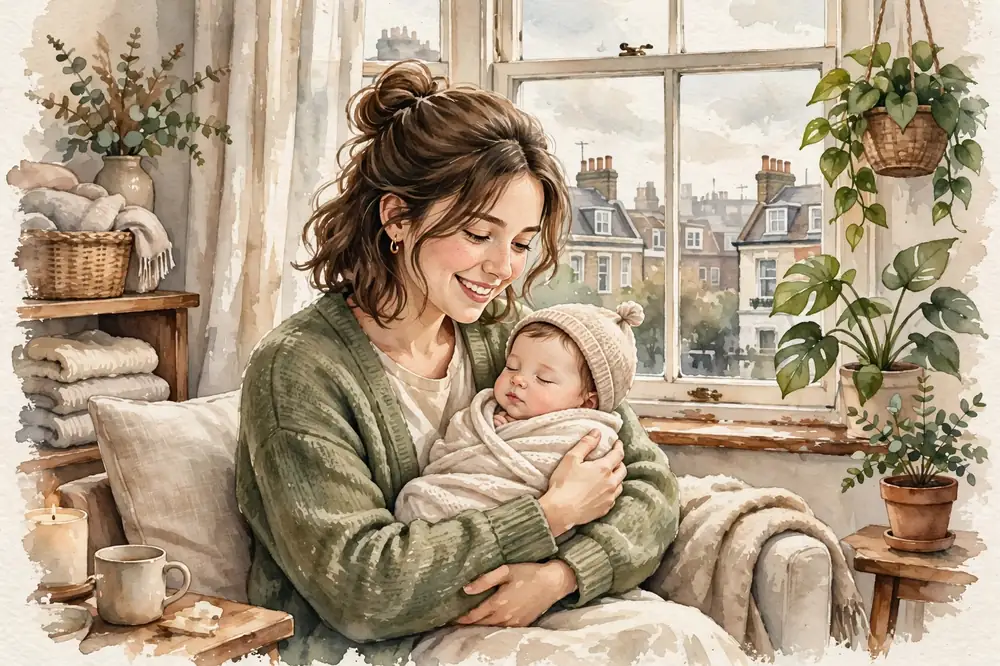
Her family life changed in April 2023, when Daisy Lowe and her fiance Jordan Saul welcomed their daughter, Ivy Love Saul. She has spoken warmly about motherhood in interviews, describing the shift in priorities that comes with a baby while still keeping her career going. Friends and family rallied around the couple, and her mother Pearl, herself a grandmother several times over, was a visible source of support.
Daisy Lowe married Jordan Saul in 2025, according to her public biography, after a long engagement. The wedding was a personal celebration rather than a media event, in keeping with how she has handled much of her private life in recent years. Saul works in property, and the couple have built a home life that balances London fashion work with quieter time as a family.
Her wider family remains close. Daisy Lowe has half-siblings on both sides, including children from her father’s later relationships, and she is often photographed with her mother and sisters at fashion events. The Lowe family home, with its famous interiors and creative chaos, has been featured in magazines over the years, giving fans a glimpse of the world she grew up in.
Why She Still Matters in Fashion
Few models stay relevant for twenty years, and Daisy Lowe has done it by adapting without losing the qualities that made her stand out at fifteen. She moved from teen editorials to luxury campaigns, from runway to television, and from modelling into design and presenting, each time without abandoning the last career. That adaptability is rare, and it is why casting directors still call her.
Her influence also runs through the next generation of British models. Younger models such as Kaia Gerber represent a similar story of famous parents and early starts, and the comparison shows how much the industry has changed since Daisy first walked for Chanel. Social media now drives fame faster, but the fundamentals she learned, showing up on time, taking direction, and treating every job seriously, have not changed at all.
On money, the honest answer is that no reliable, verified net worth figure for Daisy Lowe is publicly confirmed. Some celebrity websites publish estimates, but those numbers are not backed by published accounts or trustworthy reporting, so this article does not repeat one as fact. Her income has come from modelling contracts, campaigns, acting roles, and design collaborations over a long career, which is enough to say without inventing a total.
What endures about her is a career built on work rather than noise. She survived a very public family revelation as a teenager, turned a Camden scouting into a two-decade career, and kept evolving into acting, DJ work, and design. For readers who remember her only from a magazine cover, the fuller story is a reminder that staying power in fashion is earned season by season, job by job.
Style, Influence and What Comes Next
Her street style has become a story in its own right over the years. Photographers at London Fashion Week know to look out for her, because she mixes high street pieces with vintage finds and designer accessories in a way that looks personal rather than styled by committee. That relaxed approach has made her a favourite of street style blogs, and it also reflects a wider shift in fashion toward individuality over head-to-toe designer looks.
She has also been open about the less glamorous side of modelling, including long days on set, constant travel, and the pressure to look a certain way. In interviews she has talked about learning to push back against unhealthy expectations, and about the importance of eating well and staying strong rather than chasing an unrealistic sample size. For younger readers, that message carries weight precisely because it comes from someone who succeeded inside the system.
The design side of her career is likely to grow in the years ahead. Having watched her mother build a textiles and interiors business from scratch, she understands how a creative brand is made, not just how it is photographed. Collaborations with homeware and fashion labels suit her eye for colour and pattern, and they offer a working life that does not depend on being in front of a camera every week.
Motherhood has also changed the rhythm of her work, as she has acknowledged in interviews. Jobs are now fitted around family life rather than the other way around, and she has spoken about choosing projects that feel worthwhile instead of accepting everything on offer. That selectivity is a luxury earned over twenty years, and it is one reason her recent work feels more focused than the scattergun bookings of her early career.
Whatever comes next, her place in British fashion feels secure. She belongs to a generation of models who bridged the gap between the old world of magazine gatekeepers and the new world of social media, and she did it without scandal or burnout. For fans who have followed her since those first Vogue Italia pages, the next chapter, whether it is design, presenting, or a return to the runway, will be worth watching.