 admin

There are famous children who chase the spotlight from an early age, and then there are those who take their time, learn who they are first, and only step forward when they have something of their own to say. The young man at the centre of this story belongs firmly in the second group, and that is part of why so many readers are curious about him now. Dylan Douglas grew up with two of the most recognisable names in film as his parents, yet for years he kept a fairly low profile, studied hard, worked in politics, and only recently turned seriously towards acting.
That slower path makes the story of Dylan Douglas more interesting than a simple celebrity biography. It includes a childhood spent between Bermuda and New York, a long struggle with dyslexia that he later spoke about openly, a degree from an Ivy League university, a radio show aimed at younger voters, and a first feature film role in a Second World War thriller. None of it happened overnight, and none of it fits the usual story of a star child walking straight onto a film set.
Table of Contents
- Early Life in a Famous Family
- School, Dyslexia and Finding His Voice
- Brown University and a Different First Career
- Stepping Into Acting
- A Family of Actors
- What Comes Next
Early Life in a Famous Family
Dylan Douglas was born on 8 August 2000, the eldest child of Michael Douglas and Catherine Zeta-Jones, only a few months before his parents married. The wedding took place at the Plaza Hotel in New York City on 18 November 2000, and the baby was present for a celebration that newspapers at the time called the wedding of the year. From the very start, then, his life was tied to public attention, even though his parents tried to keep much of his childhood private.
His full name is Dylan Michael Douglas, and his family story stretches across several generations of film history. His father had already built a long career in Hollywood by the time he was born, with leading roles in dramas, thrillers and comedies, while his mother had moved from British television and stage work to major film roles in the late 1990s. His grandfather, Kirk Douglas, was one of the great stars of an earlier era, which meant the boy was born into a family where acting was not just a job but a tradition.
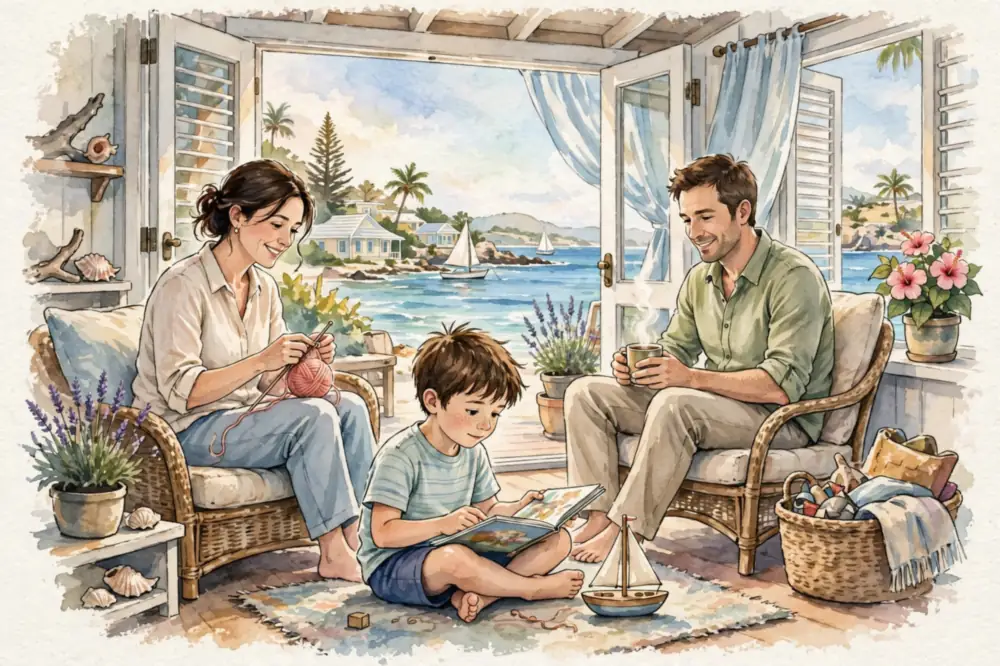
For much of his childhood, Dylan Douglas lived in Bermuda, an island setting far removed from film studios and red carpets. Reports about those years often describe happy, fairly sheltered memories, with time outdoors and a close bond with his younger sister. That island childhood matters because it helps explain why he did not grow up behaving like a child star. He was not raised on sets every day, and his earliest memories are as much about home and school as they are about Hollywood.
Later, the family moved to rural New York state, a change that brought a different kind of everyday life. The move is often mentioned in profiles of his mother, who has spoken about wanting a calmer base for the children. In both places, the pattern was similar: famous parents, but a deliberate effort to give the children room to grow up without constant cameras following them around.
His younger sister, Carys Zeta Douglas, was born on 20 April 2003, and the two siblings have remained close into adult life. They appear together at family events from time to time, and they have spoken warmly about each other in interviews and on social media. He also has an older half-brother, Cameron Douglas, from his father’s first marriage to Diandra Luker, which gives him a wider family circle that spans very different ages and experiences.
School, Dyslexia and Finding His Voice
School was not easy for Dylan Douglas at first, and he has been unusually honest about that. In a video shared on social media in 2020, he talked about living with dyslexia since the age of five and about how hard his first years in America felt. At home during that period, he said, his mother was working on Broadway, often working while he slept and sleeping while he was awake, while his father was facing a serious cancer diagnosis. The result, in his own words, was a feeling of loneliness at home.
In that same video, Dylan Douglas described school very differently. At the Windward School, he said, he finally received help for his dyslexia and felt free for the first time in a classroom. His description was vivid and personal, and it struck a chord with many people who have faced similar learning difficulties. He called the school a haven for pupils like him, and he linked that support directly to his growing confidence as a young person.
His openness about dyslexia has since become one of the most respected parts of his public image. Rather than hiding a learning difficulty, he has used his platform to talk about it in a straightforward way, and he is described in later profiles as a passionate advocate for dyslexia awareness. For readers who struggle with reading or who have children who do, that honesty is often more memorable than any film role.
The family health worries of that period also shaped Dylan Douglas. His father was diagnosed with throat cancer in 2010 and went through treatment that the whole family has described as frightening. His mother later spoke publicly about her own mental health, including treatment for bipolar II disorder. He added that by 2010 everything was normal again at home, his father was cancer free, and he could finally spend normal time with his mother. Those years left him with a sense of perspective that still comes through in his interviews.
It is worth remembering that none of this was shared as a polished press statement. It came from a young man talking to a school audience about his own life, in his own words. That tone, direct and unguarded, is part of why the clip was shared so widely. It showed someone who had learned to speak about difficulty without drama, and who understood that other people might be going through the same thing.
Brown University and a Different First Career
After school, Dylan Douglas went on to Brown University in Rhode Island, one of the Ivy League universities known for letting students shape their own course of study. There he studied political science, a choice that surprised some people who expected him to head straight into acting. In truth, the choice fitted his interests. He had grown up watching public life closely, and he wanted to understand how politics worked from the inside rather than from headlines.
Dylan Douglas graduated from Brown in May 2022 with a degree in political science. By that point he had already gained practical experience beyond the classroom. While still a student, he worked on political campaigns and grassroots organising, and profiles of him describe a spell as deputy campaign manager for a congressional race during the 2020 election. He also helped to co-found a progressive political action committee called Make Room, aimed at supporting younger, progressive candidates.
That political work continued after graduation. He spent time working for campaigns and grassroots organisations, learning how voter outreach, messaging and local organising actually happen. It was hands-on work, far from the glamour of film premieres, and it gave him a grounding in public life that few celebrity children can claim. Friends and colleagues from that period describe him as serious about the work, not simply lending a famous name to a cause.
In the summer of 2024, that experience led to a new platform of his own. Dylan Douglas launched a weekly political talk show on SiriusXM Progress called Young American, aimed at younger voters in the run-up to the United States presidential election that November. The show covered issues that mattered to his generation, including reproductive rights, climate change and gun control, and he presented it in his own voice rather than as a polished pundit.
What began as a limited series for Dylan Douglas did not stay limited for long. The programme was picked up to run indefinitely, a sign that listeners had responded to its mix of news, explanation and personal perspective. In announcing the show, he spoke about a generation that had lived through wars, the first Black president, culture wars and the prospect of a first female president, and he promised to look beyond the news of the day to the larger forces shaping the country. It was a clear statement of intent from someone who wanted to be heard, not just seen.
His radio work also showed a different side of his communication skills. On air, he had to explain complex issues clearly, listen to guests, and hold an audience without visual cues. Those are useful skills for any performer, but they are also skills that matter in public life. For many listeners, the show was their first real introduction to him as an adult with views of his own, rather than as the son of two famous actors.
Stepping Into Acting
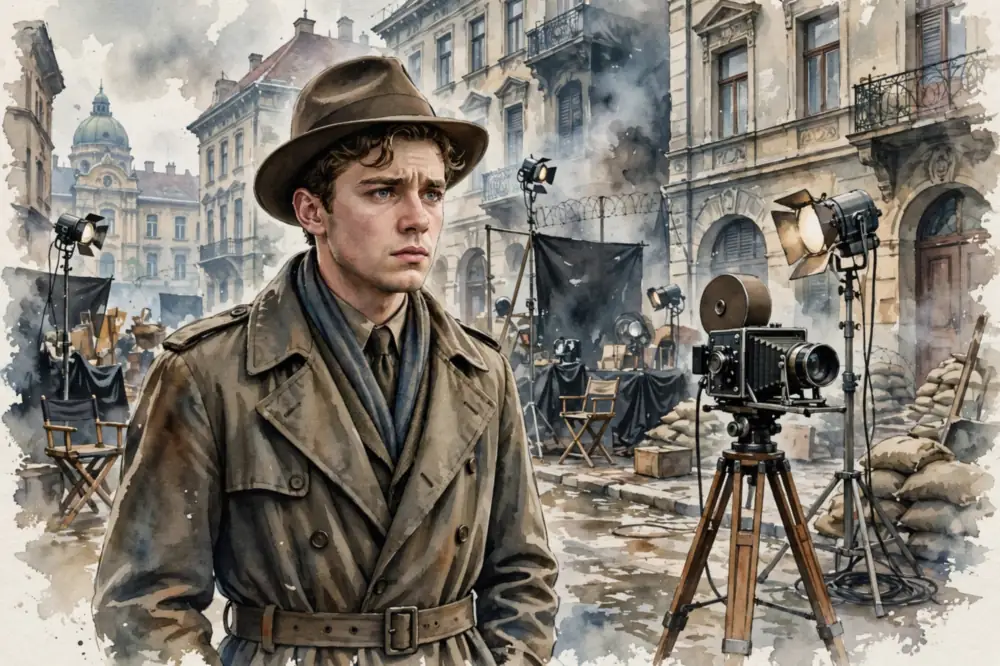
Acting had always been part of the background of Dylan Douglas, even when it was not his main career. As a small child, he appeared alongside family members in the 2003 film It Runs in the Family, a project that brought together his father, his mother, his grandfather and his half-brother. It was a gentle introduction rather than a launch, and he did not follow it with a run of child roles. Instead, he went back to school, sport and ordinary teenage life.
Later reports say he appeared in two short films before moving to feature work, although details of those smaller projects are limited in public sources. That pattern fits his cautious approach. He tested acting in smaller settings, learned how a set works, and waited until a larger role felt right rather than accepting the first offer that came with his surname. It is a slower route, but it is one that many working actors would recognise.
The first major feature role of Dylan Douglas arrived with a Second World War thriller filmed in Budapest, Hungary. The film has been reported under two titles, first as Killing Hitler during production and later as The Hit on Hitler: Mobsters vs. Nazis, so readers may see both names in coverage. In the story, he plays the younger version of Benny Lipman, a character later played as an older man by David Arquette. The plot follows American Jewish gangsters who plot against Adolf Hitler in the 1930s, a bold and unusual premise for a debut.
The film starring Dylan Douglas is directed by Danny A. Abeckaser, who also appears on screen as Meyer Lansky, and the cast includes Harry Goodwins, Greg Finley, Lorenzo Antonucci and others. Filming began in Budapest in July, according to reports published in 2026, and the production drew attention precisely because it marked a first feature role for the son of two major stars. The setting, a historic European city standing in for 1930s Berlin and America, gave the young actor a demanding period role rather than an easy contemporary part.
As of the latest reports in October 2026, the film featuring Dylan Douglas was in post-production, with no release date announced. Bleiberg Entertainment signed on in October 2026 to handle international sales and planned to present the film at the American Film Market in Los Angeles in November, with United States distribution and a premiere date to follow once a deal was in place. Readers should therefore treat any claimed release date found elsewhere with caution, since none had been confirmed in those reports.
Choosing such a film as a debut says something about the ambitions of Dylan Douglas. It is not a light comedy or a safe franchise role, but a historical thriller that asks its cast to carry serious material. Playing a younger version of a character also requires a particular skill, because the performance must feel connected to the older actor’s portrayal while still standing on its own. If the film finds an audience, it could shape how casting directors see him in the years ahead.
It is also fair to keep expectations in proportion. One feature role, however promising, does not by itself make a career, and public sources do not yet list a run of follow-up film parts. What the role does show is intent. After years in politics and radio, he has chosen to try acting properly, in a project with a real director, a real ensemble and a story that matters to its makers. That is a meaningful step, even before anyone has seen the finished film.
A Family of Actors
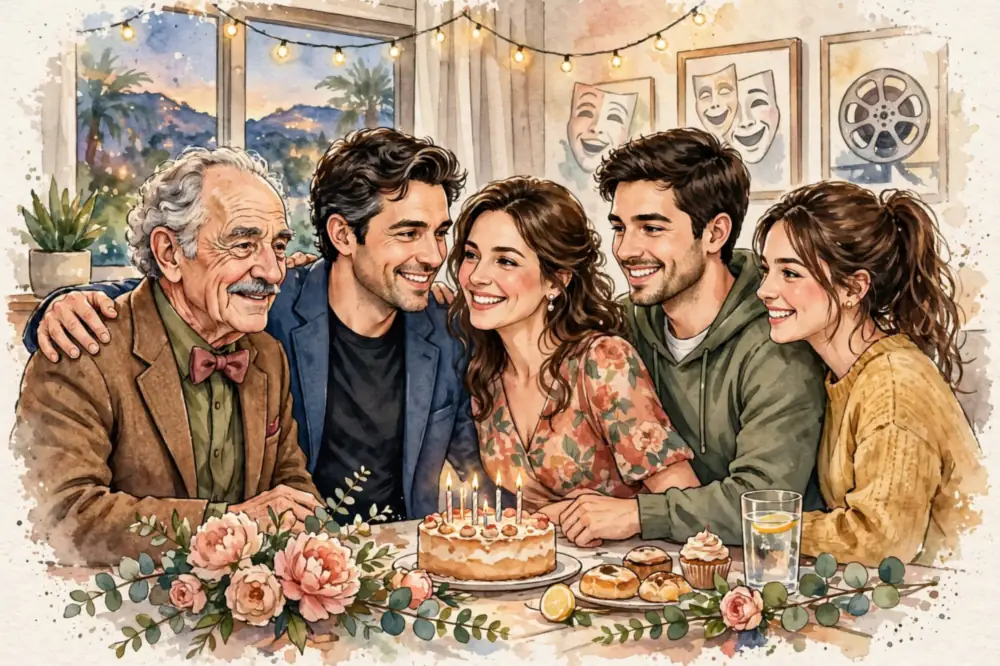
No account of the life of Dylan Douglas makes sense without the family around him. His father, Michael Douglas, built a career that moved from television to producing and then to major film stardom, winning awards and working with leading directors over several decades. His mother, Catherine Zeta-Jones, moved from British stage and television to Hollywood, with musical, dramatic and comedy roles that made her a star in her own right. Growing up with both parents in the same profession gave him an insider’s view of fame, including its rewards and its costs.
The grandfather of Dylan Douglas, Kirk Douglas, remains a towering figure in that story. Born in 1916, Kirk became one of the defining stars of post-war Hollywood and lived to the age of 103, dying in 2020. The young man in this article was still a teenager when his grandfather died, but the legacy was already part of his life, from family stories to public tributes. When people call him Hollywood royalty, they usually mean this three-generation line, and it is not an exaggeration.
Carys, the sister of Dylan Douglas, has also moved towards acting, with credits that include a role in a 2024 project, and she is reported to have studied at Brown University as well. The siblings are often photographed together at family occasions, and they share the unusual experience of growing up with famous parents while trying to build their own identities. That shared experience seems to have kept them close, even as their career paths have begun to diverge.
Cameron, the half-brother of Dylan Douglas, took a different and more difficult path, with acting credits of his own but also well-publicised struggles with addiction and time in prison. The contrast between the siblings is a reminder that a famous surname guarantees attention, not an easy life. The family has spoken about those difficulties in public at times, and the younger siblings grew up aware that fame can bring pressure as well as privilege.
For readers interested in how other children of famous actors handle the same pressures, the story of Jasper Breckenridge Johnson offers a useful comparison, since he too grew up with a well-known father and had to find his own way in public. The comparison is not exact, because every family is different, but it shows a familiar pattern: early privacy, a careful first step, and a public that watches closely once that step is taken.
For basic biographical background on the father of Dylan Douglas, readers can consult the Wikipedia article on Michael Douglas, which records the family details used here, including the children’s birth dates and the marriage date. There is no standalone Wikipedia page for the younger man himself in the sources checked for this article, so the parent article is linked instead, and readers should not expect a separate entry under his own name.
What Comes Next
Looking ahead, the most immediate question for Dylan Douglas is what happens to his debut film. A sales presentation at a film market is not the same as a cinema release, and many independent films take months to secure distribution, a festival slot or a streaming deal. Until a distributor announces a date, the sensible approach is to watch for official news from the production or its sales company rather than trusting rumours on social media.
Beyond film, his radio and political work may continue alongside acting. He has built an audience for his views on issues affecting younger voters, and that audience did not appear overnight. It grew from campaign work, a university education and a willingness to speak plainly about his own life. Even if acting becomes his main career, that background is likely to stay part of how he presents himself.
There is also the question of money, which readers often ask about with celebrity children. No reliable, verified net worth figure for Dylan Douglas was found in the sources used for this article, so none is given here. Online estimates for children of famous parents vary widely and are often little more than guesses, and repeating an unverified number would mislead readers. His own earnings, if any, from radio, campaign work and a first film role are not publicly itemised, and his parents’ wealth is not his own.
What can be said with more confidence is that Dylan Douglas enters adult life with advantages and pressures in equal measure. The advantages are obvious: contacts, a famous name, and a family who understand the industry. The pressures are just as real: constant comparison with his parents, public curiosity about his private life, and the knowledge that every early role will be judged partly on his surname. How he handles that balance will matter more than any single project.
If the story of Dylan Douglas so far offers a lesson, it is about patience. He did not rush into film as a teenager, he did not trade on his name for a quick headline, and he spent years learning in classrooms, on campaigns and behind a microphone before stepping in front of a camera in a leading role. That patience may yet prove to be his greatest asset, because it suggests a young man who wants a career, not just a moment of fame.
For now, readers who want to follow Dylan Douglas will find the clearest updates in official film announcements, his radio show and his own social media posts. Those sources, rather than gossip pages, are the best guide to what he does next. Whether his future lies mainly in acting, in politics, or in a mix of both, he has already shown that he is willing to do the work first and let the spotlight follow, rather than the other way round.