 admin
Lily Rose Depp grew up with two of the most recognisable names in film and music behind her, yet her own career has quietly become one of the more interesting stories among young actors working today. She is a French-American actress and model who has moved between French cinema, Hollywood films, television and high fashion without settling neatly into any single box, and that freedom to move between worlds is a large part of her appeal.
For many readers, the first question is a simple one: who is Lily Rose Depp beyond the famous surname? She is the daughter of American actor Johnny Depp and French singer and actress Vanessa Paradis, but she is also a working performer in her own right, with a filmography that began in her teens and has grown steadily into leading roles in both Europe and the United States.
Table of Contents
- Early Life in France
- First Steps Into Acting
- Breakthrough Roles and Career Growth
- Fashion, Modelling and Chanel
- Music, The Idol and a New Audience
- Nosferatu and Recent Work
- Family, Privacy and Public Image
- The Public Response to Her Work
- What Comes Next
Early Life in France
Lily Rose Depp was born on 27 May 1999 in Neuilly-sur-Seine, a suburb of Paris, France, and her full name is Lily-Rose Melody Depp. She holds both French and American citizenship, and growing up between France and the United States gave her a bilingual childhood in which she learned to speak both English and French fluently, a skill that would later shape her career choices.
Her parents were together from 1998 until 2012, and Lily Rose Depp spent much of her early life in France before spending more time in the United States as she grew older. That back-and-forth upbringing shows up in her work today, because she has always been comfortable moving between French-language films, where dialogue and nuance matter a great deal, and English-language projects with a very different rhythm.
She has a younger brother, Jack, whose full name is John Christopher Depp III, and her aunt is French actress Alysson Paradis, the sister of her mother. While her childhood was far from ordinary, because both parents were famous, those close to her have often described a home life that tried to stay as normal as possible away from cameras, with school, family meals and time in France at its centre.
First Steps Into Acting
Her first screen role came in 2014, when Lily Rose Depp appeared in a small part in the horror comedy Tusk, directed by Kevin Smith. The film also featured her father, and the part came about through her friendship with Smith’s daughter, Harley Quinn Smith, who also appeared in the film. It was a modest start, but it gave her a first taste of a film set and of working in front of a camera.
Two years later, she returned to work with Smith in Yoga Hosers, another offbeat comedy that reunited her with Harley Quinn Smith. Around the same time, she took on a far more serious challenge in The Dancer, a French biographical drama in which she played the pioneering dancer Isadora Duncan. The contrast between those two projects said a lot about the range she wanted to explore, even at a young age.
Her performance in The Dancer earned her a nomination for Most Promising Actress at the Cesar Awards, the French film industry’s leading honours. For a performer still in her teens, Lily Rose Depp found that recognition especially meaningful, because it came from the French film world on the strength of the work itself rather than from her family name or from publicity.
Breakthrough Roles and Career Growth
Lily Rose Depp continued to balance French and English-language work through the late 2010s, choosing projects that kept her learning rather than simply repeating the same kind of role. She appeared in the science fiction drama Planetarium in 2016, and in 2018 she starred opposite Louis Garrel in the romantic comedy A Faithful Man, a French film that showed her ease with lighter, more conversational material.

In 2019, Lily Rose Depp took a supporting role in The King, the historical drama starring Timothee Chalamet, in which she played Catherine of Valois. The film reached a wide audience through streaming, and it introduced her to viewers who had not followed her French films. It was another step away from being known only as someone’s daughter, and it showed she could hold her own in a large ensemble cast.
She followed that with roles in films including Voyagers, Wolf and Silent Night, all released in 2021. Those projects were very different from each other, ranging from science fiction to a dark, unsettling drama, and Lily Rose Depp used them to build a reputation as an actress willing to take risks rather than choosing only safe, glamorous parts that would have been easier to sell.
Fashion, Modelling and Chanel
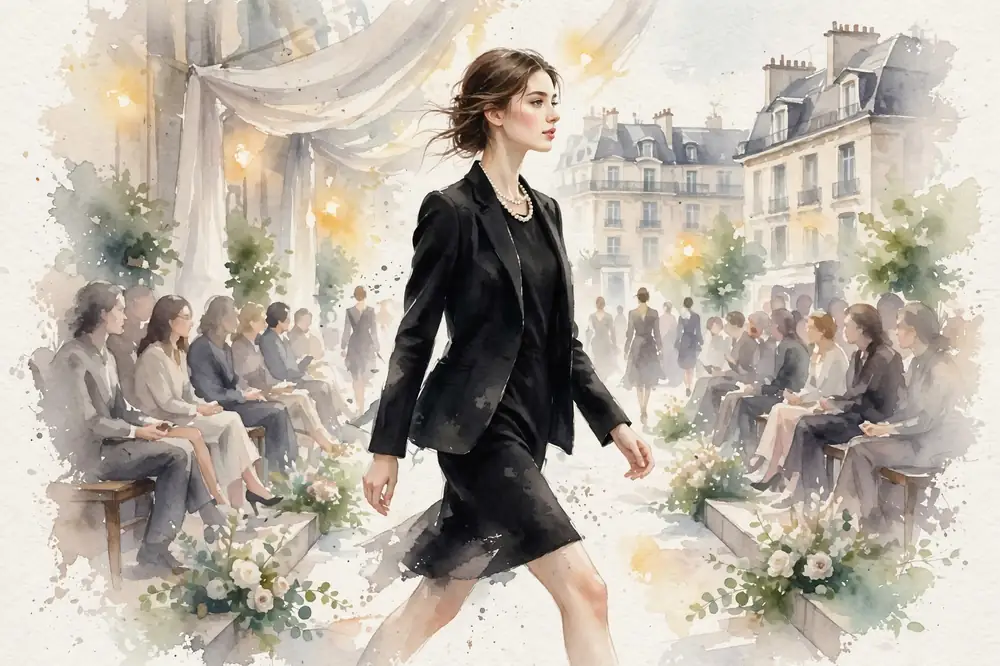
Alongside acting, Lily Rose Depp built a significant career in fashion that runs in parallel to her film work. In 2015, at the age of sixteen, she became an ambassador for Chanel, one of the most famous luxury houses in the world. She has since appeared in campaigns and fashion shows for the brand, and her name has become closely linked with its modern image in magazines and on runways.
Her modelling work suited her background, because she had grown up around fashion and photography, and her mother had also worked as a model as well as a singer and actress. Yet her fashion career has not simply been a side project. It has kept Lily Rose Depp in the public eye between films, given her a separate professional identity beyond acting, and taught her how to present herself in a highly visual industry.
For readers interested in how children of famous parents find their own path, the story of Jasper Breckenridge Johnson offers a useful comparison, because it shows another young person growing up with a well-known family name while trying to build a life of his own. The same tension between attention and independence runs through much of the story of Lily Rose Depp, and it is a theme many readers recognise from their own families, famous or not.
Music, The Idol and a New Audience
In 2023, Lily Rose Depp took on her most high-profile television role to date, starring as Jocelyn, a pop star, in the HBO drama series The Idol. The show itself divided critics and viewers, with strong reactions on both sides, but her performance, and her musical contribution to its soundtrack, reached a much larger audience than her earlier film work had done.
Her single from the series, One of the Girls, charted on the Billboard Hot 100 and went on to pass one billion streams on Spotify, according to reports summarised on her Wikipedia page. That success was notable because she showed a musical side to her work that many film audiences had not seen before, and it introduced her to listeners who might never have watched her French films.
Music has always been part of her family background, through her mother, and the series allowed her to combine acting and singing in a single role. Whether Lily Rose Depp pursues music further as a separate career remains an open question, but The Idol clearly widened the audience that now recognises her name and face, and it gave her a new kind of fame to manage.
Nosferatu and Recent Work
In 2024, Lily Rose Depp starred in Nosferatu, director Robert Eggers’s gothic horror remake, in the role of Ellen Hutter. The film was one of the most talked-about horror releases of the year, with its shadowy visuals and intense atmosphere, and her performance drew praise from critics who noted how far she had come from the small, early roles of her teens.
The part suited her strengths, because it asked for an emotionally intense, physically demanding performance rather than simple glamour. It also placed Lily Rose Depp at the centre of a major studio film, rather than on its edges, and it confirmed that directors were now casting her for leading roles on the strength of her recent work, not only on her name.
Since Nosferatu, she has remained a figure to watch in both film and fashion, with new projects regularly reported in entertainment news. As with any working actor, the details of future roles change as productions are announced, but the direction of her career is clear: she is choosing ambitious material, serious directors and leading parts.
Family, Privacy and Public Image
She has spoken in interviews about wanting to be judged on her work rather than on her family background, and about the complicated side of growing up famous. That subject, often called nepotism in Hollywood discussions, follows many children of actors, and Lily Rose Depp has addressed it directly rather than pretending it does not exist or becoming defensive about it.
At the same time, she has tried to keep much of her private life out of the spotlight. Reports have linked her since 2023 with musician Danielle Balbuena, known as 070 Shake, but she has generally kept public discussion of her personal life brief. That balance, between a very public career and a guarded private life, is one Lily Rose Depp shares with many young performers today.
Her public image today blends those two worlds: the fashion ambassador photographed at major events, and the serious actress choosing demanding film roles. It is that combination, rather than any single project, that explains why interest in Lily Rose Depp has lasted well beyond the curiosity that surrounded her as a teenager in the shadow of two famous parents.
The Public Response to Her Work
Critics first took her seriously in French cinema, where The Dancer gave reviewers a performance to judge on its own merits. That early response mattered, because French film criticism is known for being demanding, and a promising-actress nomination is not handed out lightly. It gave her a professional footing that publicity alone could never have provided, and it set a standard for the work that followed.
Mainstream audiences, by contrast, often discovered her later, through streaming films and then through television. The King reached viewers who had never seen a French art-house film, while The Idol reached an entirely different audience again, one that came for music and stayed for the drama. Each new audience brought its own expectations, and she has had to win over each group in turn.
Fashion coverage has treated her differently again, focusing on style, campaigns and red-carpet appearances rather than on acting technique. That coverage can be a double-edged sword for an actor, because it keeps a name visible but can also make serious work harder to see. She has managed that balance better than many, by letting the fashion work support, rather than replace, her film career.
Online discussion about her tends to return to the same question: how much of her success comes from talent, and how much from family? It is a fair question to ask about any child of famous parents, but it is also a question that becomes less interesting with each new role. A decade of varied work, in two languages and across several genres, is a stronger answer than any interview could give.
What fans seem to respond to most is her willingness to choose unusual projects. She has not built her career on easy romantic leads or on repeating a single successful formula. Instead, she has worked with distinctive directors, taken supporting roles when they were interesting, and accepted that some projects would divide opinion. That appetite for risk is rare, and it is part of why her career is followed closely.
Looking at her work as a whole, the pattern is one of steady growth rather than sudden stardom. There was no single overnight moment, but a series of steps, each one a little larger than the last. That kind of career is often the most durable, because it is built on experience, on relationships with directors, and on an audience that has grown up alongside the performer.
What Comes Next
Looking ahead, the most interesting question is not whether she will keep working, but what kind of actor she will become in her late twenties and thirties. Her choices so far suggest someone drawn to directors with a strong vision, to European as well as American stories, and to roles that ask for more than charm or good looks, which bodes well for a long career.
For new readers, a good starting point is her Wikipedia page, which sets out her filmography and career in full. From there, The Dancer, The King, The Idol and Nosferatu together give a fair picture of the range of Lily Rose Depp, from French period drama to modern television and gothic horror, and of how quickly she has grown.
Whatever she does next, her story already offers a useful lesson about fame and talent. A famous name can open a door, but it cannot carry a career through a decade of varied, demanding work. That part has been down to her alone, and it is why her name now stands on its own in film and fashion.