 admin
admin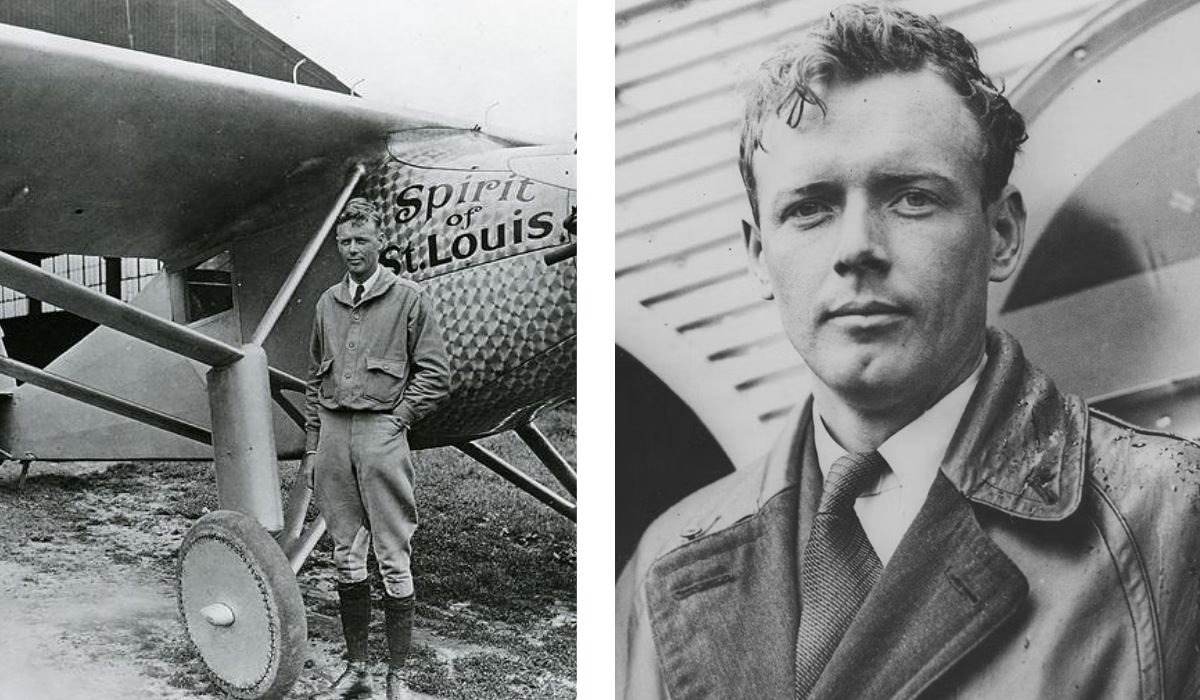
The aeronautical landscape of the twentieth century transformed forever when daring American aviator Charles Lindbergh completed the first solo nonstop transatlantic flight, instantly shrinking the globe. Long before commanding a global stage as an aviation pioneer and controversial political figure, a quiet airmail pilot in the American Midwest was busy studying aerodynamics and dreaming of conquering the skies. Aviation historians, biographers, and engineering enthusiasts across the globe continue to analyze the daring technical feats, monumental cultural fame, and complex ideological controversies that defined this legendary career.
People everywhere study this extraordinary life journey to understand the thrilling dawn of modern aviation and the heavy burdens of unprecedented celebrity. This fascinating chapter of global history serves as a powerful reminder of how individual courage can alter the geographical horizons of human civilization.
Quick Bio Section
- Full Name: Charles Augustus Lindbergh
- Date of Birth: February 4, 1902
- Place of Birth: Detroit, Michigan, U.S.
- Occupations: Aviator, military officer, author, inventor, environmentalist
- Spouse: Anne Morrow Lindbergh (m. 1929–1974)
Early Years of Mechanical Fascination and Midwestern Upbringing
Growing up in a politically active household divided between Minnesota and Washington D.C., the young Charles displayed an early fascination with machinery, automobiles, and mechanical engineering. Leaving university engineering studies early to pursue a thrilling passion for barnstorming aviation, he performed wing-walking stunts across rural agricultural fairs. Enlisting in the United States Army Air Service provided rigorous flight training and exceptional navigation skills that established his reputation as a fearless pilot. Charles Lindbergh preferred solitary mechanical troubleshooting over conventional social routines. These formative aviation years established a brilliant technical foundation that would eventually spark a profound global aeronautical revolution.
Flying U.S. Mail Routes and Preparing for the Transatlantic Challenge
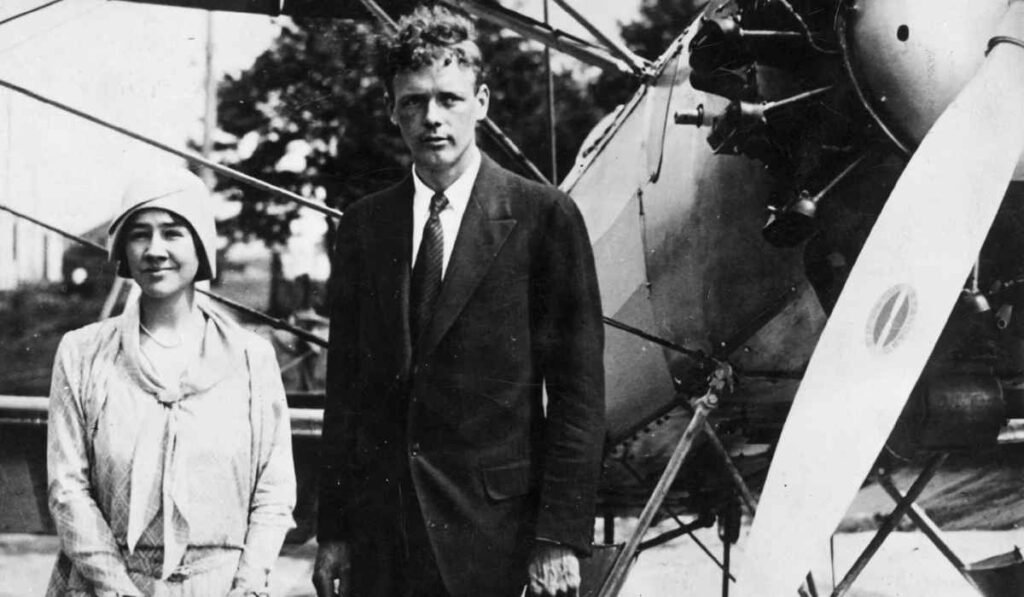
Transitioning into professional commercial aviation brought employment flying precarious nighttime airmail routes through treacherous weather conditions between St. Louis and Chicago. Mastering instrument flying and emergency parachute jumps forged nerves of steel while fueling wild ambitions to capture a lucrative financial prize offered for the first nonstop flight between New York and Paris. Securing financial backers in St. Louis allowed the commissioning of a custom single-engine monoplane designed specifically for the grueling maritime journey. Charles Lindbergh oversaw every pound of weight reduction to maximize fuel efficiency. This meticulous preparation served as the vital stepping stone toward an immortal historical moment.
Conquering the Atlantic Ocean in the Spirit of St. Louis
Global history reached an absolute turning point on May twentieth, nineteen twenty-seven, when the legendary aircraft named the Spirit of St. Louis lifted off from Roosevelt Field in New York. Navigating thirty-three and a half hours of exhaustion, freezing fog, and ice buildup across the freezing Atlantic Ocean, a triumphant landing touched down at Le Bourget airport in Paris. Thousands of ecstatic spectators swarmed the airfield, turning an unknown mail pilot into an international superstar overnight. Charles Lindbergh captured the breathless imagination of a recovering post-war world. This monumental aeronautical achievement cemented a permanent legacy as one of the greatest exploratory feats in human history.
Facing Unprecedented Global Adulation and Media Frenzy
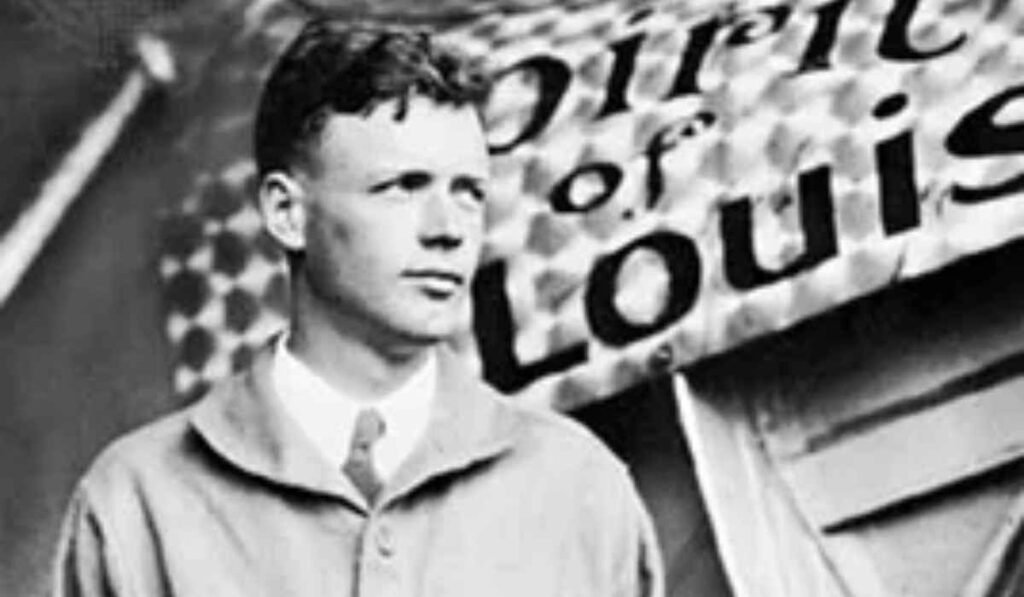
Returning to the United States aboard a heavy cruiser warship initiated a tidal wave of ticker-tape parades, presidential medals, and ceaseless global media adulation. Traveling across the nation on promotional tours, the modest aviator used his platform to advocate passionately for the expansion of commercial airline infrastructure and municipal airports. Despite immense fame, the intense public intrusion began straining personal privacy and emotional well-being. Charles Lindbergh attempted to navigate a chaotic celebrity landscape with characteristic stoicism. This overwhelming public adoration transformed an ordinary pilot into a permanent fixture of twentieth-century mythology.
Enduring the Tragic Kidnapping and Trial of the Century
Descending into unimaginable personal tragedy during nineteen thirty-two, the infant son of the famous aviator was kidnapped from his New Jersey estate in what media dubbed the crime of the century. Months of agonizing ransom negotiations ended tragically when the child’s lifeless body was discovered nearby, sparking global outrage and intense police investigations. The subsequent sensationalized trial of Bruno Hauptmann exposed the family to relentless tabloid harassment and privacy invasion. Charles Lindbergh retreated temporarily from public life seeking emotional refuge. This devastating family trauma left permanent psychological scars on the grieving parents.
Seeking European Exile and Documenting Foreign Aviation Technologies
Escaping persistent media harassment and paparazzi surveillance motivated a family relocation to Europe during the mid-nineteen thirties, establishing residences in England and France. Utilizing diplomatic connections within international aerospace circles, confidential inspections of emerging German and European military aviation manufacturing facilities were conducted. Reporting detailed technological evaluations back to American defense officials provided crucial intelligence regarding rapid foreign rearmament. Charles Lindbergh maintained a complex fascination with European industrial efficiency. This European period exposed him to rising totalitarian movements that would deeply influence his later political stances.
Championing Isolationism and Leading the America First Committee
Returning to the United States on the eve of the Second World War, passionate public speeches warned against American military intervention in European conflicts through the America First Committee. Arguing that defense preparations should focus exclusively on domestic protection rather than overseas crusade, huge crowds rallied around isolationist rhetoric. Heated political clashes with President Franklin Roosevelt painted the famous aviator as a controversial political agitator. Charles Lindbergh defended national neutrality with unyielding intellectual conviction. This divisive political chapter severely damaged his celebrated public reputation and strained relationships with the federal government.
Redeeming Public Service Through Wartime Aviation Missions
Following the Japanese attack on Pearl Harbor, immediate patriotic service was offered to the military, though President Roosevelt initially blocked active combat duty commissions. Working as a civilian technical consultant for aircraft manufacturers and military commands, dangerous flight testing missions were flown across the Pacific and European combat theaters. Demonstrating advanced fuel-saving combat techniques to fighter pilots directly improved operational ranges for American aircraft. Charles Lindbergh proved his tactical engineering value under actual fire. This courageous wartime service helped restore a measure of national respect following pre-war political controversies.
Venturing Into Postwar Conservation and Environmental Advocacy
Transitioning into environmentalism and wildlife conservation during later decades, global travels focused on protecting endangered species, indigenous cultures, and fragile ecosystems worldwide. Writing impassioned essays advocating for ecological preservation and the ethical treatment of natural resources bridged technology with environmental stewardship. Collaborating with international conservation organizations highlighted a deep spiritual respect for the natural world. Charles Lindbergh spent final years defending African wildlife and tribal habitats from industrial destruction. This visionary ecological chapter demonstrated a profound philosophical evolution away from purely mechanical ambition.
Reflecting on an Unprecedented Aeronautical and Historical Legacy
Looking back at an extraordinary multi-decade career reveals a complex portrait of daring exploration, unbearable personal tragedy, and deep political controversy. From early mail pilot routes across the Midwest to roaring ticker-tape parades and wildlife sanctuaries, Charles Lindbergh carved out a truly immortal path. Society’s view of global connectivity and aerospace technology evolved forever because one fearless aviator dared to cross an ocean alone. Future historians will undoubtedly study this remarkable professional journey as the definitive turning point of modern transportation history. Charles Lindbergh stands proudly as a towering global icon whose profound legacy continues to shape the modern world.
Frequently Asked Questions About Charles Lindbergh
- What are the birth and death years of Charles Lindbergh?
- Charles Lindbergh was born on February 4, 1902, and passed away on August 26, 1974.
- What historic aviation feat did he accomplish in May 1927?
- He completed the first solo nonstop transatlantic flight from New York to Paris.
- What was the name of the famous custom-built airplane he flew across the Atlantic?
- He flew a single-engine monoplane named the Spirit of St. Louis.
- Which major political organization did he lead during the late 1930s advocating for U.S. neutrality?
- He served as a leading public spokesman for the isolationist America First Committee.
- In what year did the tragic kidnapping of his infant son take place?
- The tragic kidnapping occurred in the year 1932.