
 admin
admin
Pluto stands as one of the most enigmatic and beloved celestial bodies in our solar system, capturing the human imagination for nearly a century. Discovered by American astronomer Clyde Tombaugh at the Lowell Observatory, this distant world was long celebrated as the ninth planet orbiting our sun. Located within the freezing expanse of the Kuiper Belt, it possesses an icy surface, a surprisingly complex atmosphere, and a massive moon named Charon that forms a unique binary system. Beyond its controversial reclassification by scientific authorities, Pluto remains a powerful symbol of cosmic exploration and the continuous evolution of our understanding of the universe.
Quick Bio section
- Full Name: 134340 Pluto
- Date of Discovery: February 18, 1930
- Place of Discovery: Lowell Observatory, Flagstaff, Arizona, United States
- Primary Designations: Dwarf Planet, Kuiper Belt Object
- Orbit Period: Approximately 248 Earth years
- Notable Companions: Charon, Nix, Hydra, Kerberos, Styx
Discovery Origins
Astronomical breakthroughs often require decades of meticulous mathematical prediction and persistent telescope observation before yielding results. Following mysterious gravitational anomalies observed in the outer orbits of Uranus and Neptune, visionary scientists predicted the existence of a distant ninth planet. Young researcher Clyde Tombaugh methodically compared photographic plates night after night at an Arizona facility until he spotted a faint moving dot. This monumental discovery electrified the scientific community and expanded the recognized boundaries of our solar system. The historic finding of Pluto opened an exciting new era of deep-space astronomy and planetary research.
Naming the World

Cultural mythology frequently intersects with scientific discovery when astronomers seek appropriate titles for newly unveiled celestial bodies. An eleven-year-old schoolgirl in Oxford, England, suggested naming the dark, freezing world after the Roman god of the underworld, a proposal quickly endorsed by observatory staff. The first two letters of the moniker conveniently honored astronomer Percival Lowell, whose financial backing and mathematical calculations made the search possible. This evocative name captured the public’s fascination, sparking decades of science fiction literature, artwork, and popular culture references. The mythological association cemented Pluto as a mysterious frontier of the solar system.
Kuiper Belt Location
The outer edges of our solar system harbor vast reservoirs of icy remnants left over from the formation of planetary bodies. Pluto resides comfortably within the Kuiper Belt, a distant donut-shaped region filled with thousands of frozen comets, dwarf planets, and ancient debris. This crowded cosmic neighborhood differs drastically from the inner rocky worlds and outer gas giants, representing a primitive time capsule of solar system history. Navigating this distant realm presented immense engineering challenges for modern space agencies planning robotic flyby missions. Understanding this icy environment helps astronomers reconstruct the chaotic birth of our cosmic neighborhood.
Planetary Reclassification
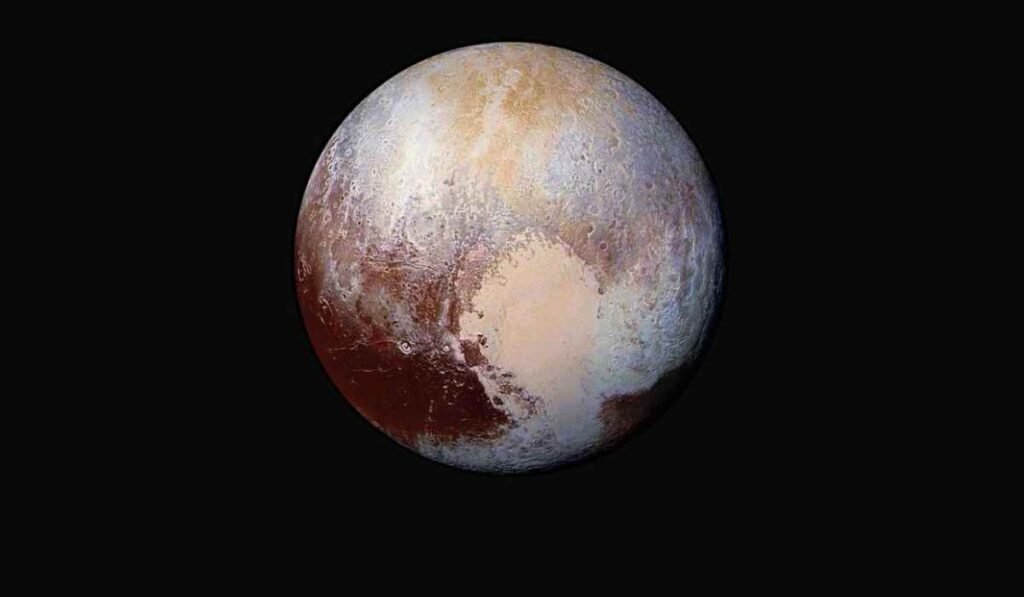
Scientific definitions evolve continuously as technological advancements allow researchers to discover dozens of similar icy bodies lurking in the outer solar system. The International Astronomical Union convened to establish formal criteria for what constitutes a major planet, requiring objects to clear their orbital neighborhood. Because Pluto shares its vast orbital path with numerous other Kuiper Belt objects, it was officially reclassified as a dwarf planet. This controversial decision sparked fierce public debate, emotional protests from school children, and widespread discussions regarding scientific terminology. Despite its demotion, Pluto lost none of its intrinsic scientific wonder.
New Horizons Mission
Direct exploration represents the gold standard of space science, transforming distant blurred telescopic pixels into breathtaking, high-definition geological landscapes. NASA launched the pioneering New Horizons robotic spacecraft on a rapid multi-year journey across the solar system to study the distant icy world. In July 2015, the probe made its historic closest approach, capturing stunning imagery that shocked scientists and the public alike. The data revealed towering water-ice mountains, vast craterless plains, and an iconic heart-shaped nitrogen glacier. This triumphant flyby mission permanently revolutionized our understanding of outer solar system geology.
Heart-Shaped Glacier

Planetary surfaces often feature unexpected geological formations that capture global attention through their striking visual symmetry. The New Horizons probe revealed a massive, light-colored nitrogen ice plain on Pluto’s surface resembling a giant cosmic Valentine heart. Named Tombaugh Regio in honor of its discoverer, this dynamic geological feature actively churns and renews itself through convective processes. Surrounding mountain ranges composed of rigid water ice rise several thousand feet above the smooth nitrogen plains, creating a breathtaking alien landscape. This unique geographical landmark became the defining visual signature of the distant world.
Complex Atmosphere
Thin gaseous envelopes surrounding distant icy bodies provide crucial insights into volatile chemicals and seasonal planetary changes. Pluto features a surprisingly hazy atmosphere primarily composed of molecular nitrogen, along with trace amounts of methane and carbon monoxide hydrocarbons. As the dwarf planet travels along its highly elliptical 248-year orbit, its atmosphere freezes and falls as snow when farthest from the sun. During closer approaches, solar heat warms surface nitrogen ice, causing it to sublimate into a temporary atmospheric haze. Studying this delicate layer helps scientists model outer solar system weather patterns.
Binary System Dynamics
Gravitational relationships between planetary bodies and their primary satellites can produce fascinating orbital mechanics and physical interactions. Pluto and its largest moon, Charon, are so closely matched in mass that they orbit a common center of gravity located entirely outside the primary body. This unique arrangement effectively creates a double planet or binary system, where Charon is always locked facing the same side of Pluto. The moon itself features a reddish polar cap, deep canyons, and ancient tectonic fractures revealed during close-range flybys. This intimate cosmic partnership offers a wealth of data for astrophysicists.
Small Outer Moons
Complex gravitational environments often capture multiple smaller celestial bodies to form intricate, multi-layered orbital systems over billions of years. Beyond massive Charon, Pluto hosts four tiny, irregularly shaped natural satellites named Nix, Hydra, Kerberos, and Styx. These small moons orbit the central binary system in chaotic, wobbling patterns driven by the shifting gravitational fields of the larger bodies. Discovered through deep Hubble Space Telescope observations, these diminutive moons resemble captured Kuiper Belt comets rather than native satellites. Their erratic behaviors continue to fascinate orbital mechanics researchers worldwide.
Scientific Mysteries
Cosmic exploration inevitably raises far more complex questions than it answers, driving future generations of researchers to dream up new missions. Scientists actively debate whether Pluto hides a subsurface liquid water ocean beneath its thick icy crust, warmed by primordial radioactive decay. Furthermore, the persistent hazes and seasonal pressure changes in its thin atmosphere suggest active geological and chemical processes previously thought impossible. Unraveling these deep mysteries requires advanced computer modeling and visionary proposals for future orbital return missions. Pluto remains a premier laboratory for comparative planetary science.
Cultural Legacy
Historical significance in popular culture often transcends strict scientific definitions or bureaucratic planetary reclassifications determined by human committees. Pluto captured the global human consciousness as the underdog ninth planet, inspiring countless science fiction novels, television shows, and art installations. Even after its reclassification as a dwarf planet, its cultural footprint remained entirely secure among space enthusiasts and astronomy fans of all ages. The emotional attachment people feel toward this distant world highlights humanity’s innate desire for cosmic connection. Pluto stands tall as a beloved cultural emblem of deep space.
Public Fascination
Educational outreach and public engagement reach unprecedented heights whenever space agencies unveil groundbreaking discoveries from our solar system’s distant frontiers. The public response to the New Horizons images demonstrated an insatiable global appetite for astronomical exploration and visual wonder. Museums, planetariums, and schools experienced surges in astronomy enrollment as students marveled at the vibrant colors of the distant world. This widespread fascination proves that deep-space science possesses a unique power to inspire curiosity and unite humanity across borders. Pluto continues to serve as a gateway inspiring future scientists and engineers.
Future Exploration
Enduring scientific inquiry ensures that humanity will eventually return to the outer solar system with advanced propulsion technologies and sophisticated instruments. Aerospace engineers and planetary scientists frequently propose ambitious follow-up missions, including orbiters designed to study Pluto and the Kuiper Belt extensively. Such future spacecraft could monitor seasonal atmospheric changes, map uncharted hemispheres, and search for subsurface oceans with unprecedented precision. As technology advances, our technological reach expands to meet the challenges of deep-space exploration. Pluto waits patiently at the edge of our solar system for our return.
Comparative Planetology
Studying diverse planetary bodies side-by-side provides researchers with essential data to understand geological processes across different solar system environments. Pluto shares surprising physical similarities with icy moons orbiting distant gas giants, bridging the gap between planetary science and comet research. By comparing its nitrogen glaciers, tectonic faults, and atmospheric dynamics with other worlds, scientists refine models of planetary evolution. This comparative approach is fundamental to astrobiology and the search for habitable environments elsewhere in the galaxy. Pluto provides a vital piece of the cosmic puzzle.
Astrobiological Significance
Searching for life in the universe extends far beyond the warm inner Goldilocks zone into the cold, dark realms of outer space. The possibility of internal liquid water oceans driven by tidal forces and internal heat raises intriguing questions about habitability in extreme environments. While Pluto’s surface is far too cold for carbon-based life as we know it, subsurface liquid layers present theoretical environments worthy of scientific investigation. Understanding how energy sustains chemistry in distant icy worlds broadens our criteria for cosmic life. Pluto contributes valuable theoretical data to modern astrobiology discussions.
Telescopic Advancements
Ground-based and space-based astronomical instruments have revolutionized our ability to study faint, distant objects at the edge of the solar system. From Clyde Tombaugh’s early photographic plates to the James Webb Space Telescope and giant terrestrial observatories, technology has progressed exponentially. Modern adaptive optics and infrared sensors allow astronomers to monitor Pluto’s surface and atmospheric changes without leaving Earth. These technological leaps ensure that continuous observation supplements data gathered by high-speed planetary flyby missions. Telescopic innovation keeps our knowledge of distant worlds perpetually updated.
Planetary Evolution
Understanding the chronological history of individual worlds helps researchers map the broader evolutionary timeline of our entire stellar system. Pluto’s heavily cratered ancient terrains contrasted against smooth young nitrogen plains tell a story of billions of years of cosmic bombardment and internal thermal activity. Studying its geological layers reveals how small bodies retain heat and undergo tectonic fracturing over deep geological timescales. This evolutionary narrative highlights the dynamic nature of seemingly dead or frozen celestial bodies. Pluto serves as an invaluable textbook for understanding planetary life cycles.
Cosmic Perspective
Astronomy offers a humbling philosophical reminder of our tiny, precious place within an unimaginably vast and ancient expanding universe. Looking out past Neptune toward the freezing expanses where Pluto orbits inspires a profound sense of awe and existential reflection. The journey from fuzzy telescopic dots to sharp, mountain-studded horizons demonstrates the triumphant power of human curiosity and intellect. As we continue mapping the outer boundaries of our solar system, our cosmic perspective deepens immeasurably. Pluto remains an eternal beacon of humanity’s boundless urge to explore the unknown.
Timeless Wonder
Historical significance in astronomy is ultimately defined by the lasting inspiration a celestial body leaves for future generations of thinkers and dreamers. As Pluto’s data continues to be analyzed by researchers worldwide, its scientific footprint expands and deepens. Its dramatic reclassification and breathtaking reveal transformed it from a simple textbook planet into a complex, beautiful icon of modern exploration. The enduring footprint of its exploration ensures its name will forever be synonymous with outer space mystery. Ultimately, Pluto stands tall as an eternal pillar of astronomical history.
5 FAQs
- When was Pluto discovered by astronomers?
- Pluto was discovered on February 18, 1930, by American astronomer Clyde Tombaugh.
- Which observatory was responsible for the initial discovery of Pluto?
- The Lowell Observatory located in Flagstaff, Arizona, served as the site of Pluto’s discovery.
- Why was Pluto reclassified as a dwarf planet?
- The International Astronomical Union reclassified Pluto in 2006 because it has not cleared its orbital neighborhood of other Kuiper Belt objects.
- What is the name of the NASA spacecraft that performed a historic flyby of Pluto?
- New Horizons is the NASA robotic spacecraft that flew past Pluto in July 2015.
- What is the name of Pluto’s largest moon?
- Charon is the massive primary moon that forms a binary system with Pluto.