 admin
admin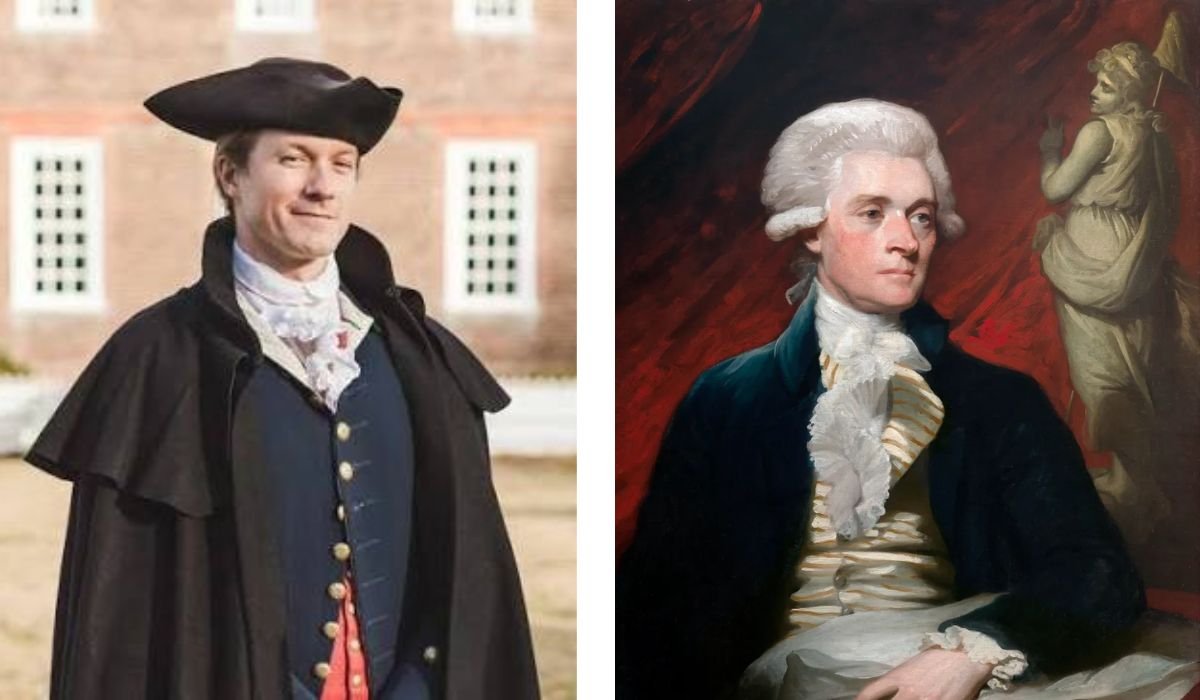
The historical landscape of human civilization transformed forever when brilliant American statesman Thomas Jefferson drafted the Declaration of Independence and established foundational principles of liberty and republican governance. Long before serving as the nation’s third president and doubling the geographical size of the country through a historic land acquisition, a studious young lawyer in Virginia was quietly composing philosophical tracts on natural human rights. Historians, political scientists, and educators across the globe continue to analyze the complex contradictions, visionary writings, and profound democratic legacy that defined this pivotal era. People everywhere study this extraordinary life journey to understand the origins of American democracy and the eternal struggle for universal freedom. This fascinating chapter of world history serves as a powerful reminder of how revolutionary ideas can reshape the political destiny of entire nations.
Quick Bio Section
- Full Name: Thomas Jefferson
- Date of Birth: April 13, 1743
- Place of Birth: Shadwell, Virginia, British America
- Occupations: Statesman, diplomat, lawyer, architect, philosopher, planter
- Spouse: Martha Wayles Skelton Jefferson (m. 1772–1782)
Early Roots of Intellectual Curiosity and Classical Education in Virginia
Growing up on a frontier plantation in colonial Virginia, the young Thomas experienced an upbringing divided between rigorous classical tutoring and outdoor wilderness exploration. Academic studies at the College of William and Mary in Williamsburg introduced him to Enlightenment philosophy, mathematics, and natural science literature. Reading ancient Greek and Roman texts in their original languages developed a sophisticated understanding of republican government and civic duty. Thomas Jefferson preferred quiet library hours and botanical observations over loud social gatherings. These formative educational years established a brilliant intellectual foundation that would eventually spark a profound American political revolution.
Practicing Law and Entering Colonial Politics in Williamsburg
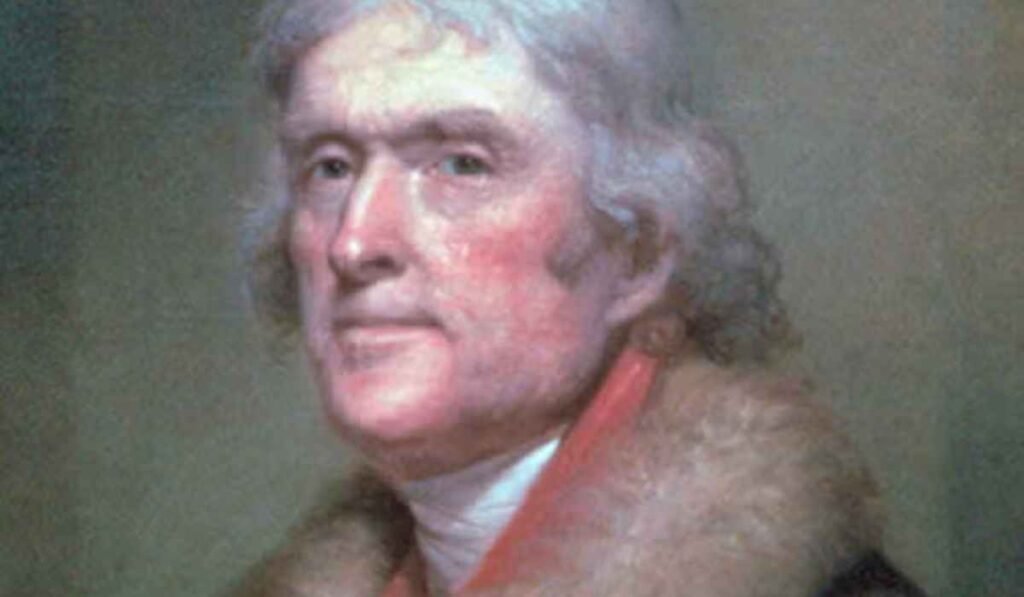
Transitioning into professional life brought early success as a practicing trial lawyer and a member of the Virginia House of Burgesses during the late seventeen sixties. Eloquent written essays defending colonial rights against oppressive British taxation quickly established his reputation as a formidable intellectual voice. Collaborating with fellow patriots fostered a fierce opposition to royal authority and parliamentary overreach. Thomas Jefferson utilized exceptional penmanship to articulate grievances on behalf of oppressed colonists. This crucial legislative foundation served as the vital stepping stone that propelled him onto the national revolutionary stage.
Drafting the Declaration of Independence and Defining Human Liberty
Global history reached an absolute turning point when a congressional committee appointed the young Virginia delegate to draft a formal declaration of colonial separation from Great Britain. Spending weeks working in a rented second-floor room in Philadelphia, eloquent paragraphs were composed asserting that all men possess unalienable rights to life, liberty, and the pursuit of happiness. Congress debated and edited the text before formal adoption on July fourth, seventeen seventy-six. Thomas Jefferson established a timeless democratic creed that continues to inspire freedom movements worldwide. This monumental literary achievement cemented a permanent legacy as one of history’s greatest political philosophers.
Serving as Governor of Virginia During Revolutionary Wartime
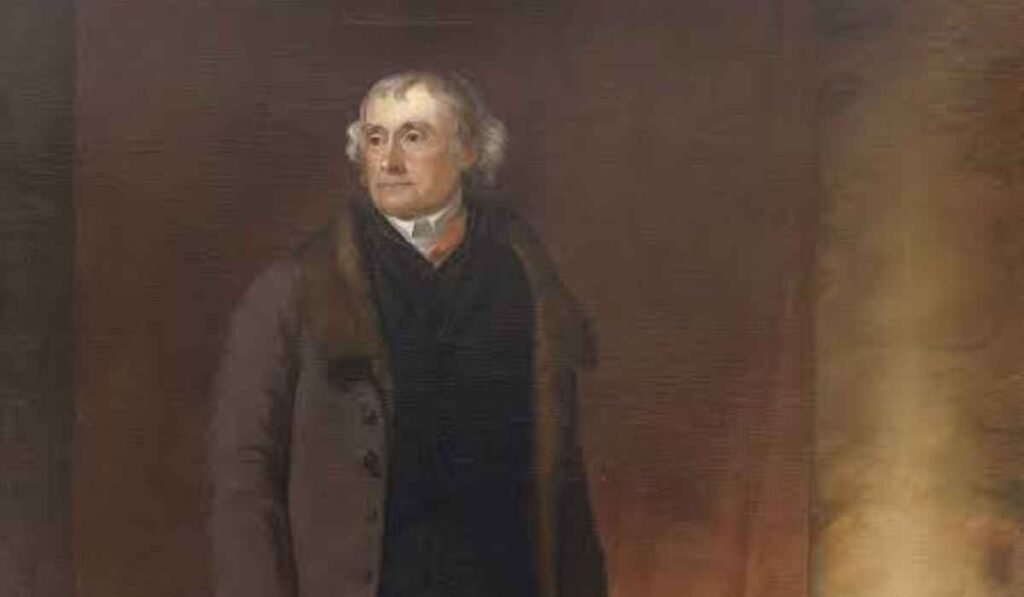
Returning to state politics, executive leadership as the second Governor of Virginia during the height of the Revolutionary War presented terrifying military and logistical challenges. British invasions forced the state government to flee capital cities on horseback while facing severe supply shortages and militia desertions. Harsh public criticism regarding executive preparedness during the sudden enemy raids deeply stung his sensitive pride. Thomas Jefferson stepped down from office determined to retire from public service and focus on domestic writing. This difficult wartime gubernatorial chapter tested emotional resilience under extreme political pressure.
Composing Notes on the State of Virginia and Intellectual Pursuits
Retreating to Monticello provided a peaceful sanctuary to write Notes on the State of Virginia, a comprehensive scientific and sociological study of his homeland. The published manuscript detailed geological formations, flora, fauna, and controversial political philosophies regarding slavery, religion, and indigenous populations. Intellectual inquiry into natural history, architecture, and linguistics occupied countless hours of quiet study. Thomas Jefferson cultivated an insatiable appetite for knowledge and book collecting that eventually formed the nucleus of the Library of Congress. This productive domestic period demonstrated a brilliant polymathic mind operating at peak creative capacity.
Diplomatic Service in France and Experiencing European Enlightenment
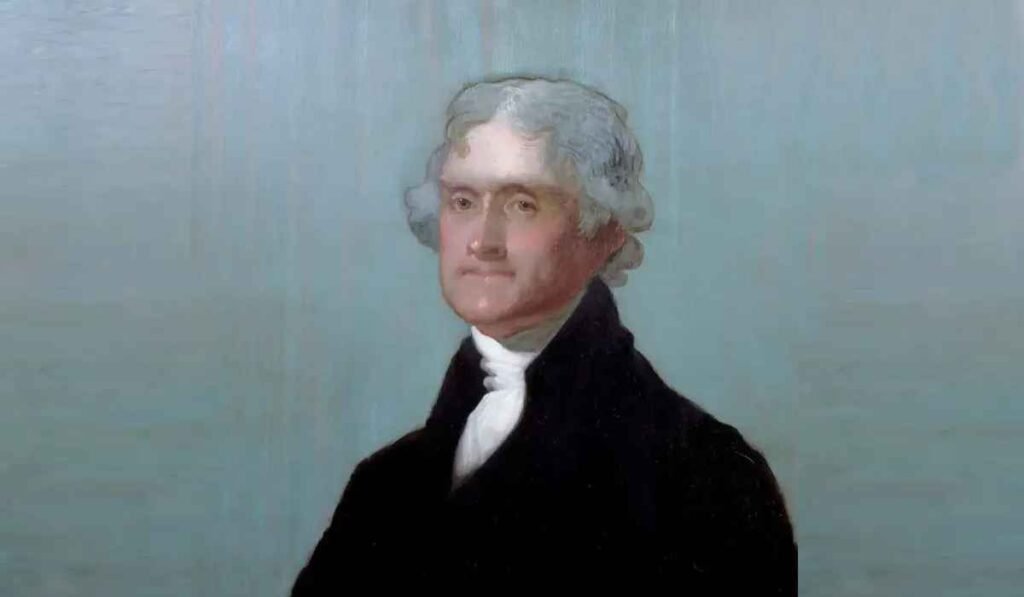
Stepping back onto the international stage involved serving as an American diplomat in Paris during the vibrant cultural buildup to the French Revolution. Negotiating vital trade treaties and rubbing shoulders with leading European philosophers expanded a sophisticated worldview regarding international diplomacy and architecture. Fascinated by neoclassical French design, meticulous architectural blueprints were drawn up to completely remodel the Monticello plantation home. Thomas Jefferson absorbed progressive European ideas while remaining firmly committed to American republicanism. This crucial diplomatic assignment broadened a global perspective that heavily influenced future presidential policies.
Serving as the First United States Secretary of State
Returning across the Atlantic Ocean brought appointment by President George Washington as the inaugural Secretary of State for the newly formed federal government. Intense ideological clashes erupted immediately within the presidential cabinet against Treasury Secretary Alexander Hamilton regarding federal power versus states’ rights. Advocating for a strict constitutional interpretation and an agrarian economy placed him at the center of fierce partisan political battles. Thomas Jefferson eventually resigned from cabinet duties, frustrated by the centralization of executive financial authority. This foundational political rivalry birthed the American two-party system.
Winning the Presidential Election of Eighteen Hundred and Historic Shift
Political leadership of the Democratic-Republican party culminated in winning the hotly contested presidential election of eighteen hundred against incumbent John Adams. Often called the peaceful revolution of eighteen hundred, this historic transfer of executive power proved that democratic republics could survive partisan polarization. Emphasizing government economy, decentralized administration, and individual liberties defined the initial presidential agenda. Thomas Jefferson walked to his inauguration ceremony, rejecting pomp and monarchical styling. This symbolic presidency redefined executive authority and established a populist tone for early American democracy.
Executing the Louisiana Purchase and Doubling the National Territory
Achieving the crowning geopolitical triumph of his presidency occurred through the historic negotiation and purchase of the Louisiana Territory from French Emperor Napoleon Bonaparte. Paying fifteen million dollars doubled the total geographical landmass of the United States overnight, securing control over the vital Mississippi River basin. Dispatching the Lewis and Clark expedition to explore the uncharted western wilderness opened up endless scientific and economic possibilities. Thomas Jefferson acted boldly outside strict constitutional boundaries to secure this continental empire. This massive territorial expansion permanently altered the geopolitical destiny of the American republic.
Promoting Religious Freedom and Founding the University of Virginia
Championing personal liberties extended to authoring the Virginia Statute for Religious Freedom, which successfully disestablished the state church and protected conscience rights. Dedicating final retirement years to educational reform materialized through the architectural design and academic establishment of the University of Virginia. Rejecting traditional religious instruction in favor of secular higher education scandalized conservative critics across the state. Thomas Jefferson took immense personal pride in overseeing every brick laid on the academic lawn. This visionary educational institution ensured that enlightenment principles would educate future generations of American leaders.
Facing Deep Personal Contradictions Regarding the Institution of Slavery
Behind the soaring democratic rhetoric of human equality, complex personal realities revealed a deeply troubling contradiction as a lifelong plantation slave owner. Owning hundreds of enslaved human beings at Monticello while publicly acknowledging the moral evil of slavery exposed a painful historical hypocrisy. Historical evidence and DNA testing confirm a decades-long relationship with enslaved woman Sally Hemings, resulting in children born into bondage. Thomas Jefferson struggled internally with economic dependence on a brutal labor system without mustering the political courage to free his own workforce. Historians continue to examine these profound ethical failures objectively alongside monumental political contributions.
Retiring to Monticello and Managing Massive Financial Debts
Stepping down from public office brought a permanent return to the beloved mountaintop estate of Monticello to manage agricultural fields and massive personal debts. Hosting endless streams of political visitors, curious tourists, and European intellectuals bankrupted the aging statesman completely. Extensive correspondence with lifelong friend and rival John Adams produced some of the most profound philosophical letters in American literature. Thomas Jefferson maintained an optimistic curiosity about science and democracy until his final breath. This declining financial chapter highlighted the stark economic vulnerabilities of plantation life.
Passing Away on the Fiftieth Anniversary of American Independence
Reaching the momentous golden jubilee of the nation he helped create, death arrived peacefully at Monticello on July fourth, eighteen twenty-six. In a stunning historical coincidence, former President John Adams passed away on the exact same day across Massachusetts. Final words reflected an abiding concern for the survival of American liberty and republican governance. Thomas Jefferson left behind a deeply mixed legacy of inspiring democratic ideals and painful human contradictions. This poetic passing on Independence Day cemented an immortal place in the historical memory of the nation.
Examining the Lasting Historical Trauma and American Ideals
Reflecting upon the complex legacy left behind by this foundational architect compels modern societies to grapple with the tension between stated ideals and historical realities. Educational curricula, historical preservation sites like Monticello, and civil rights discussions ensure that both brilliant democratic triumphs and moral failures are examined. International legal frameworks and constitutional principles were heavily shaped by his visionary writings on human rights. Thomas Jefferson remains a towering yet deeply controversial figure in global history. Studying this multifaceted life serves as an eternal reminder of the ongoing evolution of human freedom and justice.
Frequently Asked Questions About Thomas Jefferson
- What are the birth and death years of Thomas Jefferson?
- Thomas Jefferson was born on April 13, 1743, and died on July 4, 1826.
- Which foundational document did he draft in the year 1776?
- He drafted the United States Declaration of Independence, articulating unalienable human rights.
- What major territorial acquisition did he oversee during his presidency in 1803?
- He oversaw the Louisiana Purchase, which doubled the geographical size of the United States.
- What university did he design and establish during his retirement years?
- He founded and designed the architecture for the University of Virginia.
- In what year did he serve as the third President of the United States?
- He served two presidential terms from 1801 to 1809.